Your Retainer Looks Clean. That Doesn't Mean It Is.
An investigation into the microscopic buildup brushing, rinsing and tablets can leave behind, and the cleaning method designed to reach it.

18 August 2026 · By Akram Mohamed
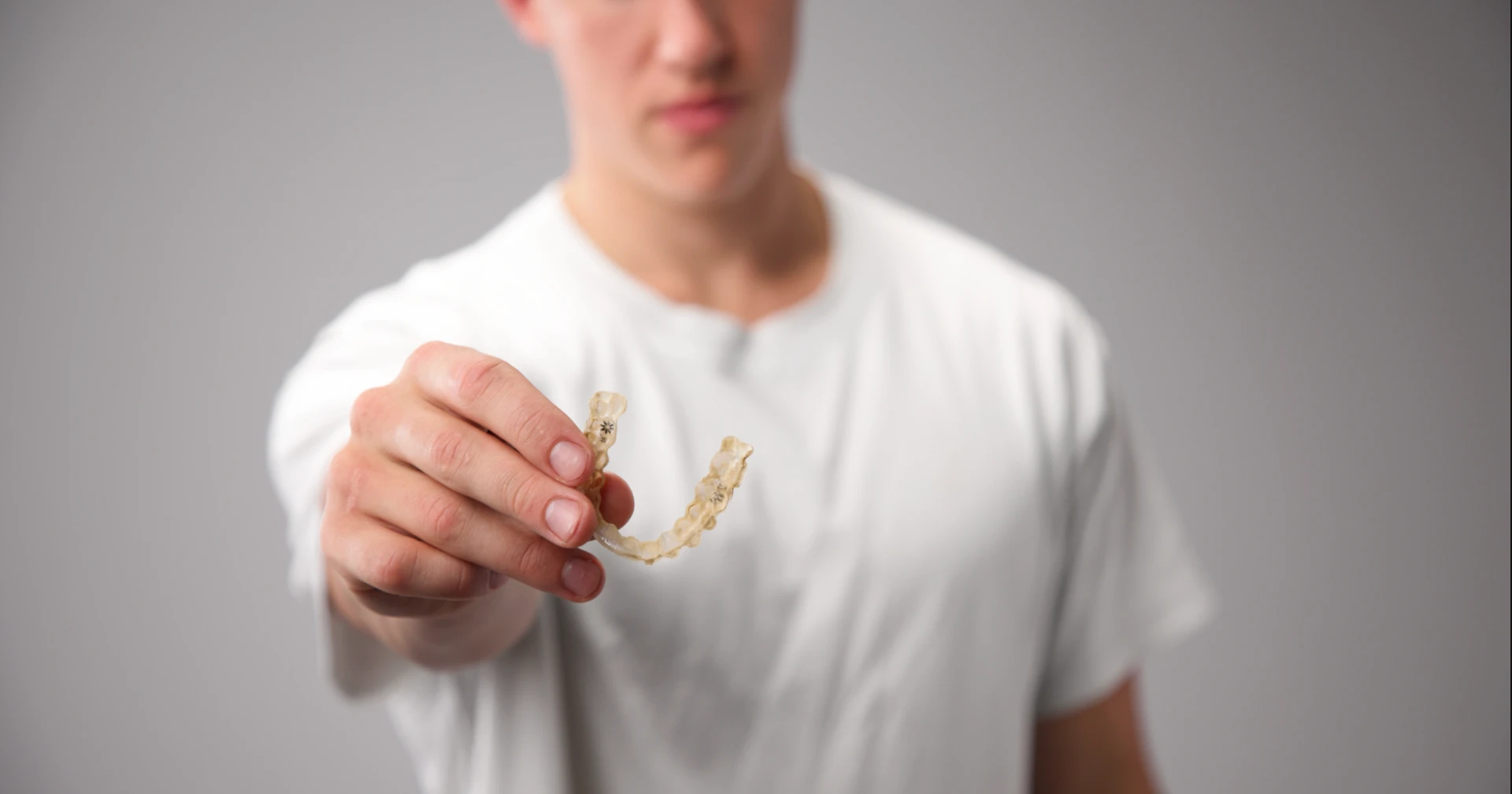
What I Discovered Hiding on a ‘Clean’ Retainer
I started researching biofilm, the microscopic layer of bacteria that forms on wet surfaces. One detail stopped me: retainers provide an especially hospitable environment for it.
A retainer can look clean while biofilm remains attached to its surface.
So I investigated whether the cleaning methods most of us rely on actually remove it.
That Cloudiness May Not Be Ageing Plastic. It Could Be Buildup.
Mine had a faint haze along the edges, the kind most people chalk up to “the plastic getting old.” Nearly everyone I asked offered that same explanation, unprompted.
What is biofilm?
Biofilm is a thin, sticky layer of bacteria that adheres to a surface. Because it is attached rather than loose, rinsing alone may not remove it.
Visible debris can be removed while microscopic buildup remains.
A retainer spends hours a day in a warm, moist environment coated in saliva and food residue, close to ideal conditions for that layer to establish itself.
The cloudiness I saw likely wasn't the biofilm itself, but the visible residue of buildup that had been accumulating for a while. Which raised the question that kept the investigation going: if it's visible on the surface, what is happening on the parts I can't see?
I Clean My Retainer. So Why Can Buildup Remain?
I'm not careless about this. I brush, I rinse, I've used cleaning tablets for years.
But following a cleaning routine and effectively removing attached buildup are not necessarily the same thing. Here is how the three methods almost everyone uses compare.
Brushing
What it does well
Physically removes visible debris from accessible surfaces.
Where it may fall short
Bristles may struggle to reach small grooves, seams and textured areas. Aggressive brushing may also scratch some retainer materials.
Rinsing
What it does well
Quickly washes away loose particles and surface residue.
Where it may fall short
Water flow alone may not dislodge buildup that has adhered to the retainer.
Cleaning tablets
What they do well
Can help with odour, staining and general freshness.
Where they may fall short
Results depend on the formulation, contact time and the type of buildup being cleaned.
The problem isn't necessarily how often you clean your retainer. It may be the method you're relying on.
Cleaning tablets can help with staining and freshness, but results vary with formulation, contact time and the type of buildup involved.
So I Asked: What Actually Does Work?
Ultrasonic cleaning has long been used as part of professional instrument-cleaning processes, precisely because visible cleanliness is not always a sufficient standard.
The mechanism is straightforward once someone explains it.
- Ultrasonic waves move through the water
- Millions of microscopic bubbles rapidly form and collapse
- The resulting agitation reaches small grooves, seams and textured areas
Think of it as microscopic cleaning action in places bristles cannot easily reach.
The at-home device using the same cleaning principle
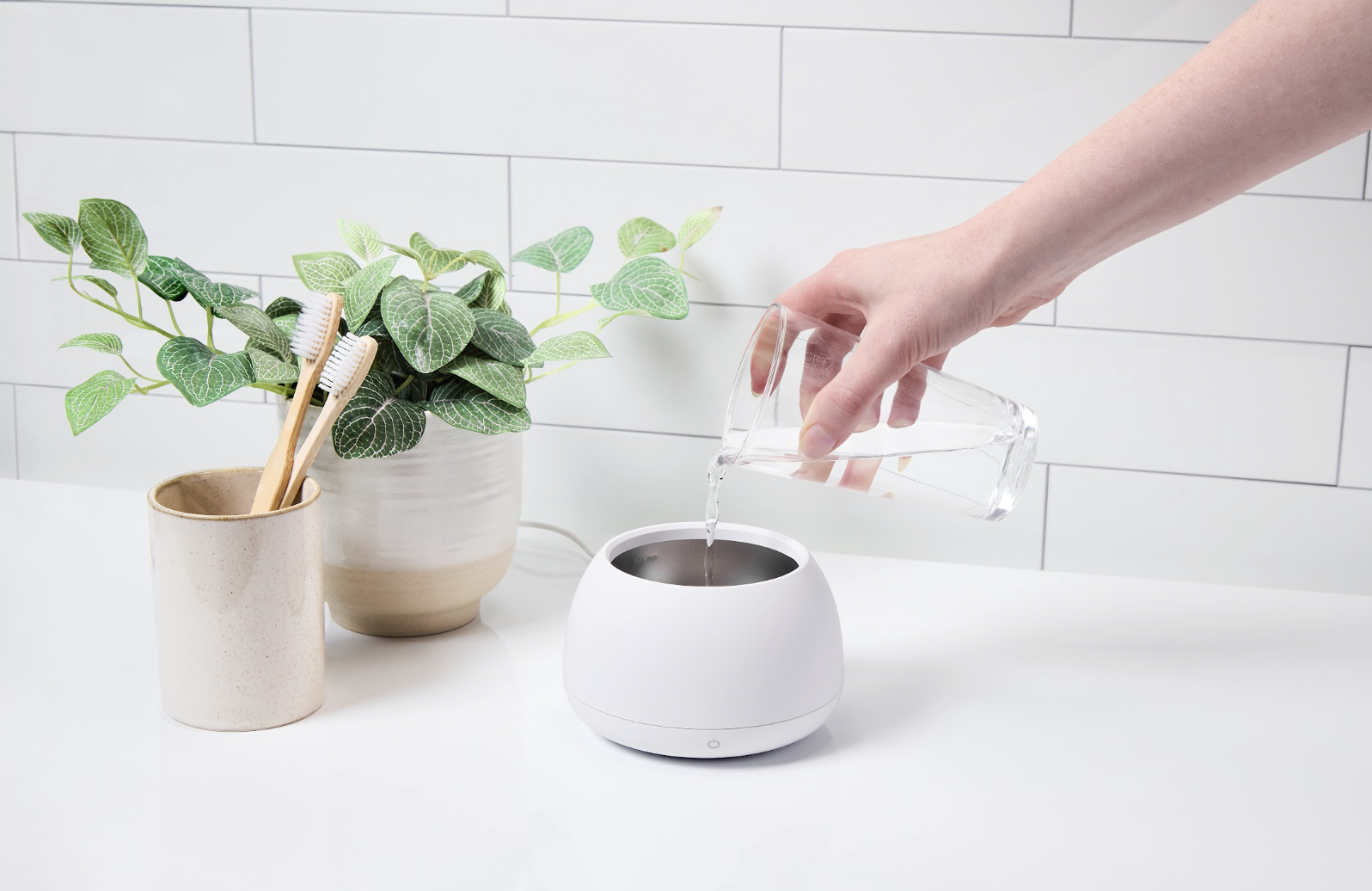
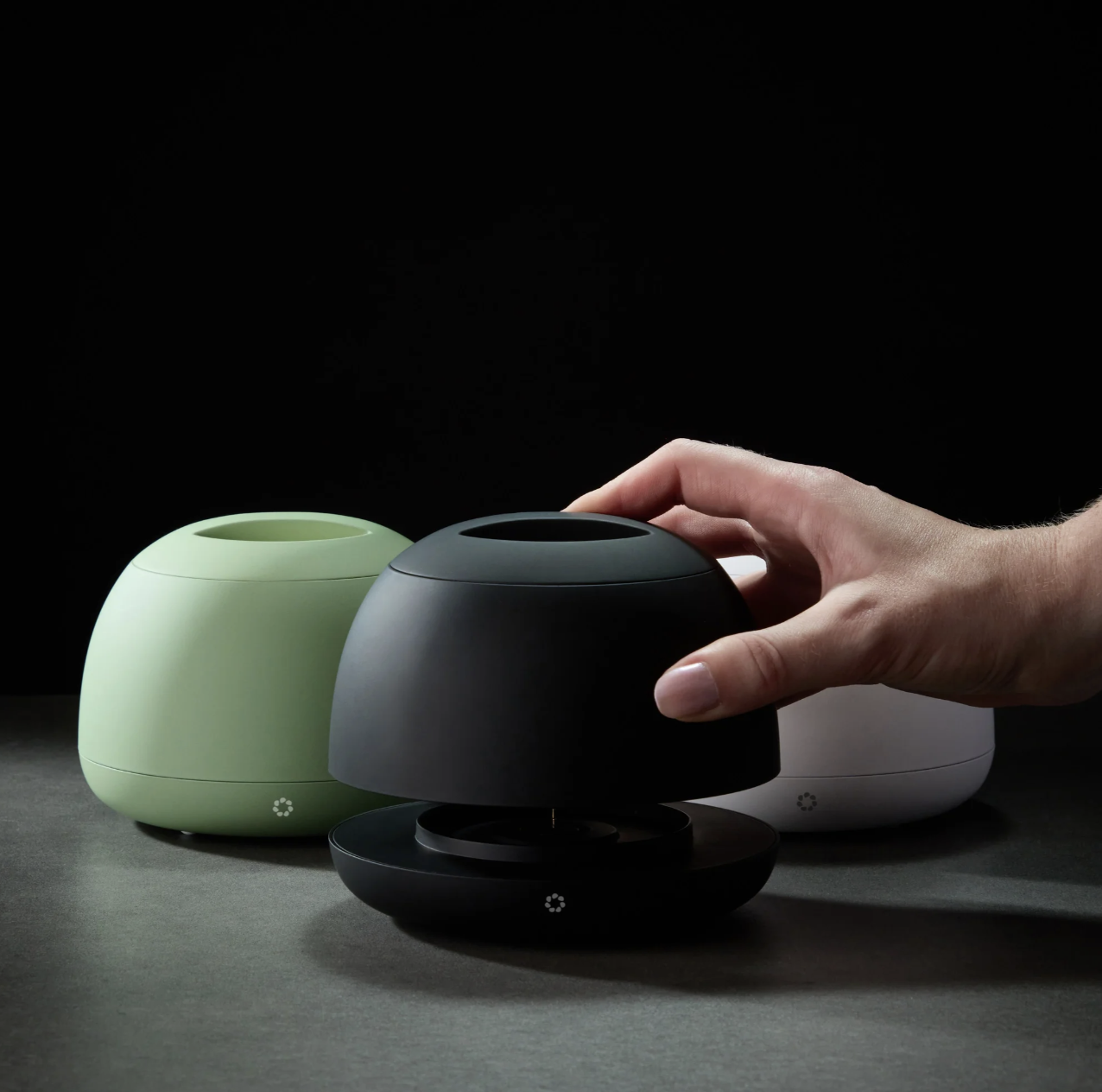
The Dental Pod uses ultrasonic waves and water to clean retainers, aligners and other dental appliances, including small grooves that brushing may miss.
A Deeper Clean Without More Scrubbing
The Dental Pod applies the same ultrasonic principle used on professional instruments, in a small device built for home use.
Uses ultrasonic waves rather than abrasive brushing
Cleans through the surrounding water to reach grooves and seams
Requires only a few simple steps
Designed for retainers, aligners and other dental appliances
How It Actually Works
One button. One short cycle. No scrubbing.
- Add water
- Place your retainer inside
- Press the button
- Remove it when the cycle finishes
The Difference I Noticed
Ultrasonic cleaning has been standard practice in dental settings for years. What surprised me was how recently that principle reached daily retainer care.
“I don't wonder anymore whether my retainer is actually clean or just rinsed off.”
- I no longer wonder whether my retainer is clean or merely rinsed off
- The routine takes less time than brushing did, not more
- It's one process for a retainer, an aligner or a night guard
Try it at home
Try the Dental Pod at Home
As of this writing, the Dental Pod by Zima ships free and comes with a 30-day risk-free guarantee.
The Problem Wasn't My Effort. It Was My Cleaning Method.
I assumed buildup meant people weren't cleaning their retainers often enough. What I found was different.
Brushing, rinsing and tablets can all help, but they aren't designed to reach every microscopic groove where buildup can form.
That is why I changed to ultrasonic cleaning.
The offer
Try the Dental Pod at Home
As of this writing, the Dental Pod by Zima ships free and comes with a 30-day risk-free guarantee.
- Free shipping
- 30-day risk-free guarantee
- Simple one-button cleaning
- Suitable for retainers and aligners